
When is a symptom a diagnostic problem, not a pruning problem?
A symptom is a diagnostic problem when cutting first could make things worse, or when the visible issue is a sign of something larger you cannot see. Plenty of tree problems are exactly what they look like and call for straightforward work. But certain signs point to an underlying cause, and reaching for a saw before understanding that cause can turn a manageable situation into an expensive one.
Here are five signs that should prompt a professional diagnosis before any work is scheduled.
1. Sudden thinning or dieback in the crown
When a tree’s canopy thins noticeably in a single season, or branches begin dying from the tips inward, the problem is very rarely the branches themselves. Dieback in the crown is most often a symptom of trouble at the other end of the tree — root damage, soil compaction, girdling roots, or a vascular disease interrupting the flow of water and nutrients. The branches are simply where the shortage shows up first.
This is exactly the situation where “pruning out the dead” without a diagnosis fails. The dead wood comes out, the tree looks tidier for a season, and the underlying cause keeps working. By the time the symptom reappears, the window for effective treatment may have narrowed considerably. Around Kansas City, I see this pattern often in trees whose root zones were disturbed by construction, grading, or trenching two to five years earlier — the delay between root damage and visible decline is long enough that almost nobody connects the two.
If your tree thinned suddenly, went off-color early, or is dying back from the top, that is a diagnostic visit, not a trim.
2. Mushrooms, conks, or decay at the trunk or base
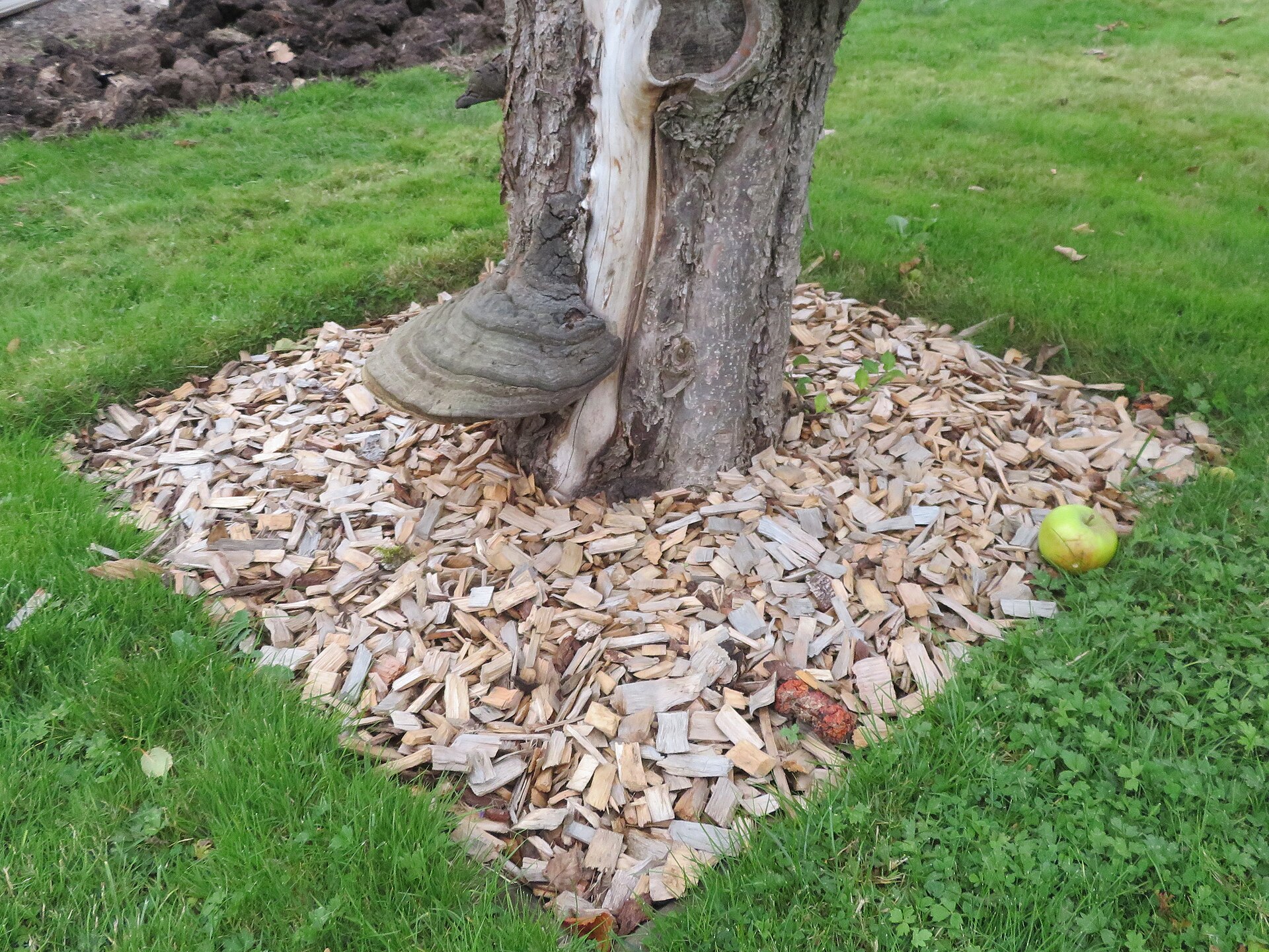
Fungal fruiting structures — mushrooms at the base of the trunk, shelf-like conks on the bark, soft or sunken areas of wood — deserve attention because of what they imply. A conk is the visible reproductive structure of a fungus whose body is inside the tree, and by the time fruiting appears, some amount of internal decay is usually established.
What matters is not whether decay exists — many mature trees carry some and stand for decades — but how extensive it is, where it sits, and what the tree stands over. Decay in the lower trunk or root flare raises structural questions that no amount of pruning addresses, and the answer determines everything: monitor, reduce load, or in some cases remove. Cutting into or around decay without understanding its extent can also remove the very wood the tree has built to compensate.
This is the sign most worth taking seriously, because it sits at the intersection of health and safety. A diagnosis establishes what the fungus is and what it means; where targets are involved, it extends naturally into a formal risk assessment.
3. A new lean, fresh cracks, or heaving soil at the base
Some signs are not about health at all — they are about structure, and they are urgent. A lean that was not there before, a vertical crack opening in the trunk or a major limb, or soil lifting and cracking on one side of the root plate all suggest that the tree’s anchorage or structure is actively changing. This is different in kind from the slow, established lean many trees grow with for their entire lives.
These signs call for professional evaluation promptly — not a spot on next month’s pruning schedule, and not a wait-and-see. If the tree stands within reach of a house, a driveway, a play area, or a neighbor’s property, the assessment should happen before the next serious wind event, which in a Kansas City summer is never far away. An assessment does not always mean the tree comes down; sometimes the finding is reassuring, or the answer is a support system or load reduction. But this is the one category where I would rather see someone call too early than too late.
4. Off-season color change, wilting, or bark abnormalities
Leaves turning fall colors in July, sections of canopy wilting while the rest looks fine, sap or dark fluid weeping from the bark, sawdust-like material at the trunk, or bark peeling in patterns the species does not normally show — these are the signs of disease and pest problems, and they are the category where misdiagnosis is most common and most costly.
The reason is that many of these problems are treatable, but the treatments are specific. The right response to one insect is meaningless against another; a fungicide application aimed at the wrong disease is money spent to no effect while the actual problem advances. Some of the region’s serious threats — oak wilt among them — also have management implications beyond treatment, like when it is safe to prune. Getting the diagnosis right, sometimes with laboratory confirmation, is the difference between a targeted response and an expensive guess.
An independent diagnosis has one more advantage here: the person identifying the problem is not the person selling the treatment program. My diagnostic assessments come with no spray truck attached.
5. The same symptoms on multiple trees
When one tree declines, the cause is usually in that tree. When several trees decline together — especially different species — the cause is usually in the site. Shared symptoms across a property point toward soil compaction, drainage changes, grade changes, herbicide exposure, or construction impact: things that operate on everything rooted in the same ground. A species-specific pest, by contrast, tends to announce itself by working through one kind of tree while its neighbors stand untouched.
This distinction changes everything about the response. Treating individual trees for a site problem is a losing game; the site keeps reapplying the cause. A pattern across multiple trees calls for a property-level look — soil, water, history, and what changed in the year or three before the decline began. That is consulting work in the truest sense, and it is where a diagnosis can save the most money, because it replaces per-tree treatments with an answer to the actual problem.
What should you do if you recognize one of these signs?
Get a diagnosis before you schedule work. The order matters: diagnosis first, then the decision, then — only if warranted — the work. A written diagnostic assessment tells you what is wrong, how serious it is, and what to do about it, which may be treatment, monitoring, targeted work you can hand to any qualified tree service, or the honest answer that nothing needs to be done at all.
If something on this list looks familiar in your yard, get in touch and describe what you are seeing. I will tell you honestly whether it warrants a visit — and if it does not, that answer is free.
Have a tree question of your own?
If something in your yard, your case, or your project needs a clear, independent answer, let’s talk it through. No pressure, no commitment.